Workflow
How to Brief a Visualization Studio So the First Draft Is Close
Most revision rounds come from the brief, not the render. What to send, the five questions to answer, and how to review so the first draft lands close.
Most revision rounds aren't about rendering skill. They're about the brief.
When a first draft misses, the cause is usually a question nobody asked up front: which view matters most, what time of day the scene should read, which material is still undecided, or who actually signs off. Each unanswered question becomes a guess, and each guess becomes a correction.
A good brief doesn't need to be long. It needs to answer the questions a studio would otherwise have to guess at. Here's what to send, what to decide, and how to review so the first draft lands close and the review round goes to refinement.
What to send
Send whatever exists at this stage. You don't need to produce a new deliverable just to brief a studio, and good studios can work from sketches and references when there's no model yet.
- Drawings or a model: plans, elevations and sections, or a SketchUp, Revit or Rhino file. Mark the current revision clearly.
- Site context: photos, orientation, neighbouring buildings, and anything the view must show or hide.
- Material intent: a schedule if you have one, references if you don't, and a short list of what's still open.
- Mood references: two or three images of the light and atmosphere you want. More than that tends to pull in different directions.
Five questions every brief should answer
1. Who is the image for, and what must they decide? A homeowner approving a kitchen layout needs something different from a board approving a facade. Name the audience and the decision. It changes camera height, level of detail and how much context goes in.
2. Which views carry the decision? Rank them. If the client will judge the project on the approach and the living room, say so, and those views get the most time. A render set isn't a list of rooms. It's the order a person will experience the place in.
3. What time of day and season? Morning, dusk or overcast change how materials read more than almost anything else. Pick one per view, or ask for a recommendation.
4. What's fixed, and what's still open? Tell the studio which elements are settled and which you're still testing. Open items can be shown as options instead of being decided by the visualizer.
5. Who signs off, and when? One decision owner per round saves more time than any other single change. If the client and the architect both review, agree in advance whose comments win.
Review at the right stage
The most expensive correction is the one found on a finished photoreal image. Reviewing in stages catches problems while they're still cheap to fix:
- Gray model: geometry, proportion, openings and camera position. Nothing else.
- First materials and light: palette, time of day and mood.
- Final: small refinements only.
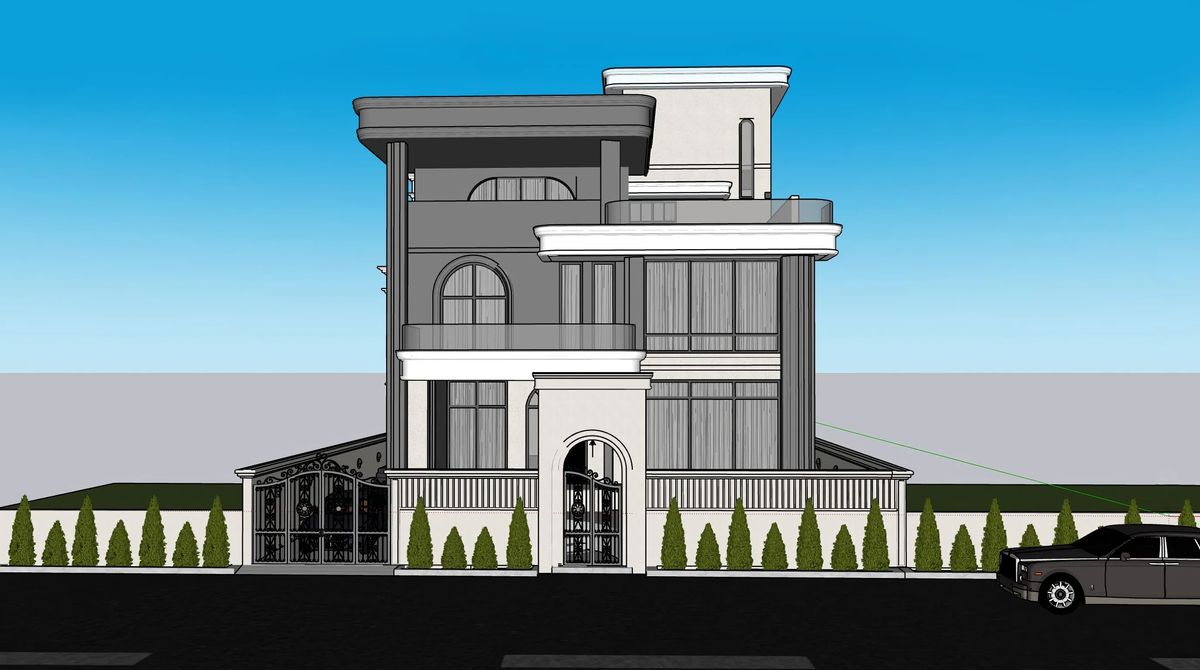
The model stage is where proportion, openings and camera are agreed. Once those are right, materials and light change what a client can feel, not where anything sits.
How to give feedback that lands
- Mark up the image. Numbered notes on the render beat a paragraph of email.
- Send one list per round. Consolidate comments from everyone before sending, so the studio isn't reconciling contradictions.
- Say what you want, not only what's wrong. "Warmer, like the reference" is actionable. "Doesn't feel right" isn't.
- Separate design changes from render corrections. If the design moved, say so. It's a different conversation from a missed brief.
A one-page brief you can reuse
- Project, stage and audience
- The decision the images must support
- Views, ranked, with camera notes
- Time of day per view
- Fixed elements vs open items
- Materials: schedule, references or "studio to propose"
- Decision owner and review dates
How we work
Our first call on any project is mostly questions, because the answers decide the first draft. We work from CAD, SketchUp, sketches or references, review geometry before anything goes photoreal, and typical turnaround is 3–7 days per deliverable.
If you're still choosing a studio, start with how to choose an architectural visualization company. Or see how we work with architects and our work. Every great design deserves to be understood.